The Clint Eastwood Problem: Admiring a Man Too Much

Post-2000, no filmmaker has influenced me quite like Clint Eastwood. Those who follow me on Facebook and X probably already know how much I admire him. Those who don't, well, this is as good a day as any to confess my addiction.
Today, Clint Eastwood turns 96.

And yes, I am one of those people who will stop whatever they're doing if an Eastwood film appears on television.
My story with Clint Eastwood begins somewhere around 1993. I was spending my summer holidays at my grandfather's house. Let me tell you a little about my grandfather, Mr. V. Ramachandra Kurup.

He was one of those rare men who consumed knowledge as if time itself were running out. His modest library contained books on everything imaginable. Literature, history, mythology, science fiction, politics, engineering manuals—you name it, he probably had it. He could do electrical wiring, fix plumbing, advise on construction, sketch out ideas for architects, and quote literature in everyday conversation. He could express complicated opinions in remarkably short sentences. In many ways, he was an encyclopedia without the weight of one.
One of my fondest childhood memories is sitting beside him while he watched films on television.
In 1993, cable television was still finding its feet in India. Television itself was a luxury in many homes. Somehow, we had both. Together we watched Bond films, westerns, war movies, science fiction, thrillers and action films from every decade imaginable.
Most of the time I fell asleep before the climax. The next morning, my grandfather would narrate the ending to me over tea. That became our routine. Then one evening, everything changed. We watched The Good, the Bad and the Ugly. For the first time, I didn't fall asleep. I watched every minute of it.

The dusty landscapes. The morally ambiguous characters. The silence. The tension. The music. The absurdly long standoffs that somehow never became boring. I was completely absorbed.
My grandfather was fascinated by how intensely I engaged with the film. I remember overhearing him tell someone later that I had asked unusually thoughtful questions about a film that many adults found confusing and exhausting.
Sadly, I don't remember those questions. But I remember the film. And I remember the feeling. That was the day Clint Eastwood entered my life.
Over the next decade, HBO and Star Movies became my film school. Whenever an Eastwood film appeared, I watched it. Later, when I got my first laptop in the early 2000s and torrents became a thing, I went completely overboard. I downloaded everything that had Clint Eastwood's name attached to it. Films. Interviews. Documentaries.
I even hunted down episodes of Rawhide.

Today, decades later, I still find myself returning to his films. Not merely because they are entertaining. Because Eastwood understands something fundamental about people—their loneliness, their stubbornness, their regrets, their violence, their dignity and their redemption. His films are rarely loud. They don't beg for your attention. They simply sit there with absolute confidence and wait for you to come to them. So, on Clint Eastwood's 96th birthday, here are ten films that I keep returning to again and again.
10. Play Misty for Me (1971)

Eastwood's directorial debut remains one of the most effective psychological thrillers ever made. He plays a radio DJ whose casual affair turns into a nightmare when an obsessive fan refuses to let go. Long before "stalker thrillers" became a genre of their own, Eastwood was exploring obsession, loneliness and emotional instability with surprising maturity. The film also revealed his talent behind the camera, proving he was much more than a squinting cowboy.
Trivia: Eastwood personally selected the film's famous Monterey Jazz Festival sequences because he is a lifelong jazz enthusiast.
9. The Eiger Sanction (1975)

Part espionage thriller and part mountaineering adventure, The Eiger Sanction remains one of Eastwood's most underrated films. He plays a retired assassin drawn back into the world of murder while attempting a dangerous climb in the Swiss Alps. The film combines spy intrigue with genuinely nerve-racking climbing sequences. It is rough around the edges, but endlessly entertaining.
Trivia: Eastwood performed many of the dangerous climbing scenes himself, despite objections from the studio and insurance companies.
8. The Good, the Bad and the Ugly (1966)
The film that started it all for me. Sergio Leone transformed the western into mythology, and Eastwood's Blondie became an immortal cinematic figure. Set during the American Civil War, the film follows three morally questionable men searching for buried gold. It is epic in scale yet surprisingly intimate in its character moments. Every frame feels iconic.
Trivia: Eastwood was reportedly paid only about $250,000 for the film—a bargain considering it became one of the most influential movies ever made.
7. Trouble with the Curve (2012)

This is Eastwood at his most quietly emotional. He plays an ageing baseball scout struggling with failing eyesight while attempting to reconnect with his daughter. It is not a flashy film and doesn't pretend to be. Instead, it relies on strong performances and genuine human relationships. Every time I watch it, it feels warmer.
Trivia: Although Eastwood stars in the film, it is one of the few late-career projects he did not direct.
6. Million Dollar Baby (2004)
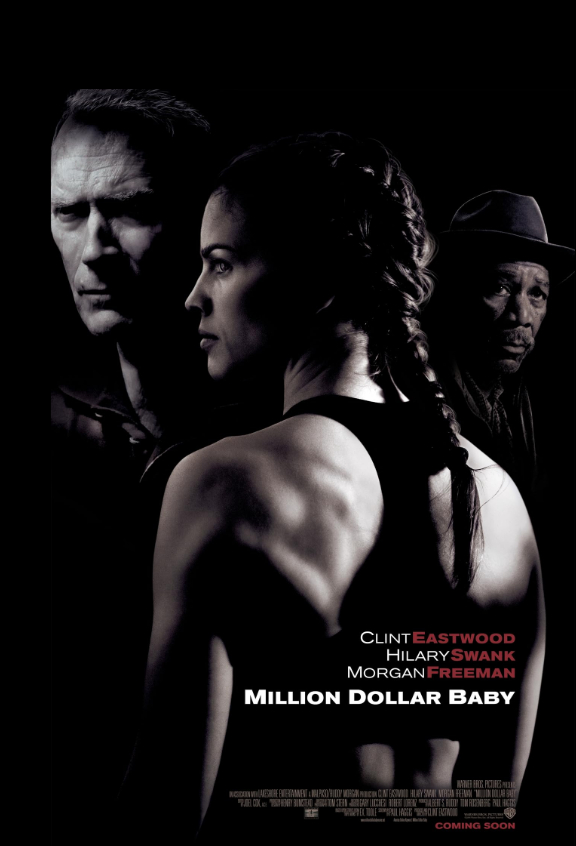
A devastating film disguised as a sports drama. Eastwood directs and stars as Frankie Dunn, a boxing trainer who reluctantly mentors a determined young woman. The film begins as an underdog story and gradually transforms into something much deeper and more heartbreaking. It asks difficult questions about dignity, suffering and love.
Trivia: The film won four Academy Awards, including Best Picture and Best Director.
5. Dirty Harry (1971)

Few characters have become as deeply embedded in popular culture as Harry Callahan. As the uncompromising San Francisco detective hunting a sadistic serial killer, Eastwood created one of cinema's most enduring antiheroes. The film captures a city on edge, balancing police procedural tension with sharp commentary on crime, justice and bureaucracy. Decades later, Harry's methods remain controversial, which is precisely why the film continues to provoke discussion. Tough, stylish and unapologetically direct, Dirty Harry transformed Eastwood from a Western icon into a modern cinematic legend.
Trivia: Eastwood was not the first choice for the role. The part was considered by several actors, including Frank Sinatra, who eventually passed on it due to a hand injury. The famous line, "Do you feel lucky, punk?" was not in the original script as we know it today and evolved during production into one of the most quoted moments in film history.
4. Unforgiven (1992)

This is the film that dismantled decades of western mythology. Eastwood's William Munny is not a heroic gunslinger but a tired, broken man haunted by his past. Every conventional western fantasy is challenged and questioned. The film is brutal, reflective and profoundly sad. It may be the greatest western ever made.
Trivia: Eastwood dedicated the film to directors Sergio Leone and Don Siegel, the two men who most shaped his career.
3. The Bridges of Madison County (1995)

People are often surprised when I rank this film so highly. They shouldn't be. Beneath its romantic surface lies one of the most mature examinations of love ever put on screen. Eastwood and Meryl Streep create a relationship so believable that every choice hurts. The film understands that some of life's most important stories last only a few days.
Trivia: Meryl Streep received an Academy Award nomination for her performance and considers it one of her finest roles.
2. Pale Rider (1985)

My favourite Eastwood western after Unforgiven. Part biblical allegory, part revenge story, part ghost tale, Pale Rider creates an atmosphere unlike any other western. Eastwood's mysterious Preacher may be one of the most fascinating characters he ever played. The film balances myth, morality and action with remarkable confidence.
Trivia: The title references one of the Four Horsemen of the Apocalypse from the Book of Revelation.
1. Gran Torino (2008)

For me, this is Eastwood's masterpiece as both actor and director. Walt Kowalski is gruff, prejudiced, stubborn and deeply wounded. Yet beneath the hard exterior lies a man capable of extraordinary sacrifice. The film explores generational change, immigration, guilt and redemption with unusual honesty. Every viewing reveals something new.
Trivia: Many of the Hmong actors in the film had little or no prior acting experience before being cast.
People who know me well often joke that I have a little bit of Eastwood in me. I don't know if that's true.
What I do know is this: very few artists remain relevant across seven decades. Even fewer reinvent themselves repeatedly while refusing to chase trends. Clint Eastwood managed both.
At 96, he remains one of the last living links to a vanished era of cinema—a filmmaker who trusted audiences to think, trusted silence more than dialogue, and trusted stories more than spectacle.
So, Happy Birthday, Clint.
And thank you for making a curious boy stay awake through an entire movie all those years ago. #ClintEastwood #HappyBirthdayClintEastwood #EastwoodAt96 #DirtyHarry #Rawhide #TheGoodTheBadAndTheUgly #Unforgiven #GranTorino #WesternCinema #FilmHistory #ClassicHollywood #MovieMemories #CinemaLovers #FilmBuff #MovieBuff #Cinephile #HollywoodLegends #FilmDirector #ScreenLegend #MyFavoriteFilmmaker


Comments